

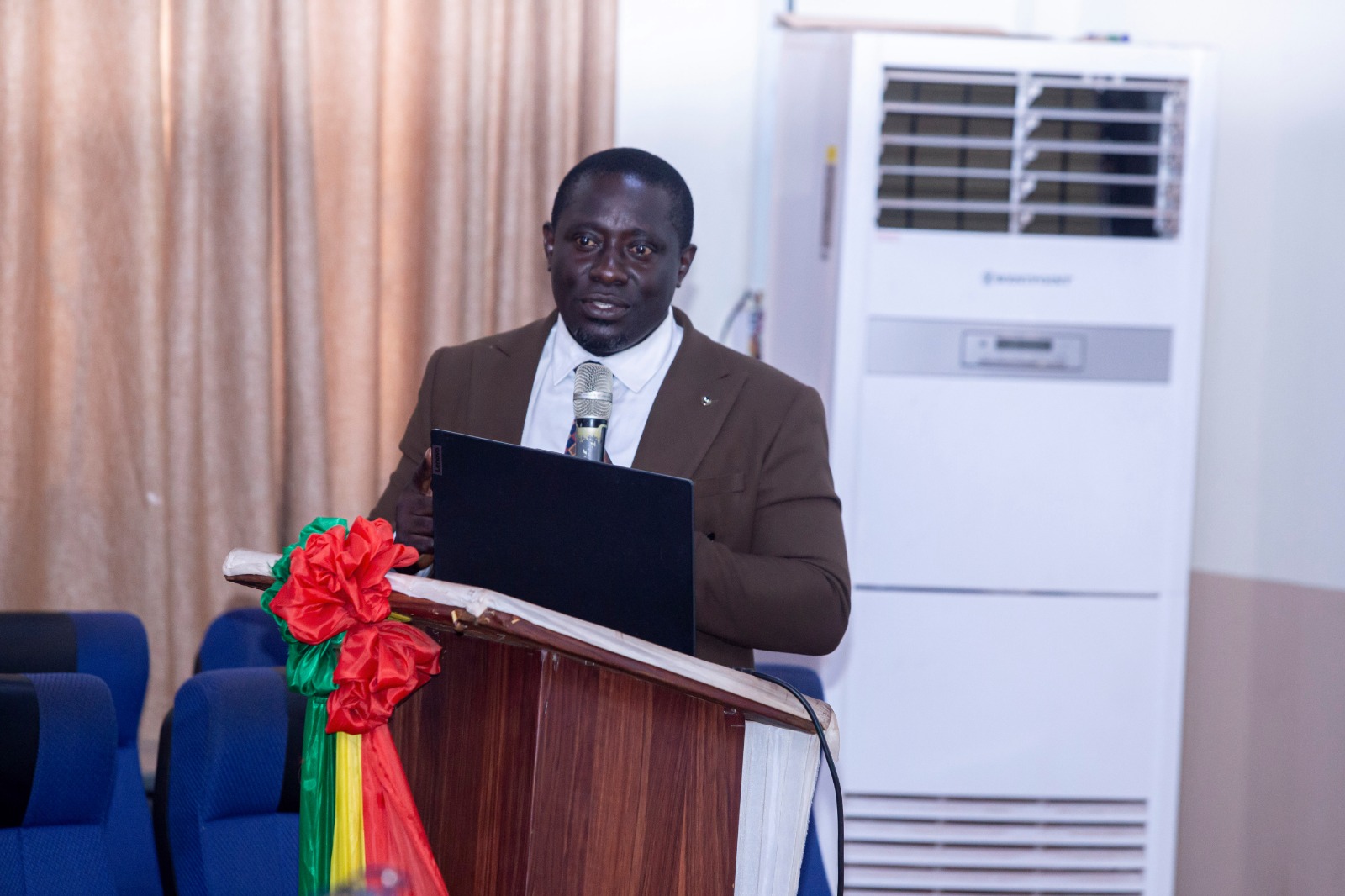
The Executive Secretary of the Vice-Chancellors of Technical Universities–Ghana (VCTU-G), Mr. Joseph Mensah Oti-Asirifi, has urged university administrators, lecturers and other professionals to embrace Artificial Intelligence (AI) as a productivity tool while ensuring that human judgement, critical thinking and professional competence remain at the heart of institutional decision-making.
Mr. Oti-Asirifi made the remarks during the 3rd Ghana Tertiary Education Commission (GTEC) Summer School, held from 9th to 10th July 2026 at the Kwame Nkrumah University of Science and Technology (KNUST), Kumasi. The event brought together Vice-Chancellors, Rectors, Principals, policymakers, academics, researchers and industry leaders to deliberate on the future of technology in Ghana’s tertiary education sector.
His comments followed the announcement by the Director-General of GTEC, Prof. Ahmed Jinapor Abdulai, of the appointment of Prof. Gordon Adomdza, Associate Professor and Executive Director at CEIBS Africa, to chair the national committee responsible for drafting Ghana’s Artificial Intelligence Policy for Tertiary Education Institutions (TEIs).

According to Mr. Oti-Asirifi, the emergence of AI presents enormous opportunities for improving teaching, research, student services and university administration. However, he cautioned that institutions should avoid allowing technology to replace the professional judgement and expertise of academics and administrators.
“Artificial Intelligence should support professional work and not substitute professional competence. University administrators, lecturers and professionals ought to interrogate, validate, refine and improve AI-generated outputs instead of becoming passive consumers of whatever the technology produces.”
He explained that AI systems can generate reports, policy drafts, research summaries and administrative documents within seconds, but such outputs must never be accepted at face value.
“Every AI-generated information should undergo careful human review before it informs institutional decisions. Speed should never be mistaken for accuracy,” he stressed. Mr. Oti-Asirifi warned that excessive reliance on unverified AI-generated content could expose institutions to ethical breaches, poor decision-making and reputational risks.
“Artificial Intelligence does not understand institutional culture, statutory obligations, organisational priorities or professional accountability in the same way experienced administrators and academics do. Human judgement must therefore remain central. AI should inform decisions, not make them”, he declared.
The VCTU-G Executive Secretary further urged tertiary institutions to invest in AI literacy and digital skills development for both academic and administrative staff so they can use AI responsibly, critically and ethically.

He also expressed confidence in the committee chaired by Prof. Gordon Adomdza, describing the proposed national AI Policy as a timely opportunity to establish a framework that promotes innovation while safeguarding academic integrity, professional standards and responsible governance across Ghana’s tertiary education sector.
Mr. Oti-Asirifi reaffirmed VCTU-G’s commitment to supporting GTEC in developing an AI policy that empowers higher education institutions to harness the benefits of Artificial Intelligence without compromising the indispensable role of human judgement